What senior candidates actually compare
I would ask a candidate which benefit features matter, without asking about diagnoses, pregnancy plans or family medical history. Provide the same accurate benefits packet to each candidate for the role. The decision can involve a partner's coverage, a specialist network or a medicine, but those details belong in a private conversation with the benefits administrator if the candidate chooses to share them.
A benefits comparison has several independent parts. Employee premiums recur even in a year with little care. Deductibles affect some services but not necessarily every visit. The out-of-pocket limit applies only to specified covered spending. Provider access and drug coverage can matter even when the premium is lower. I would put these items in separate rows so the candidate can see the trade-offs.
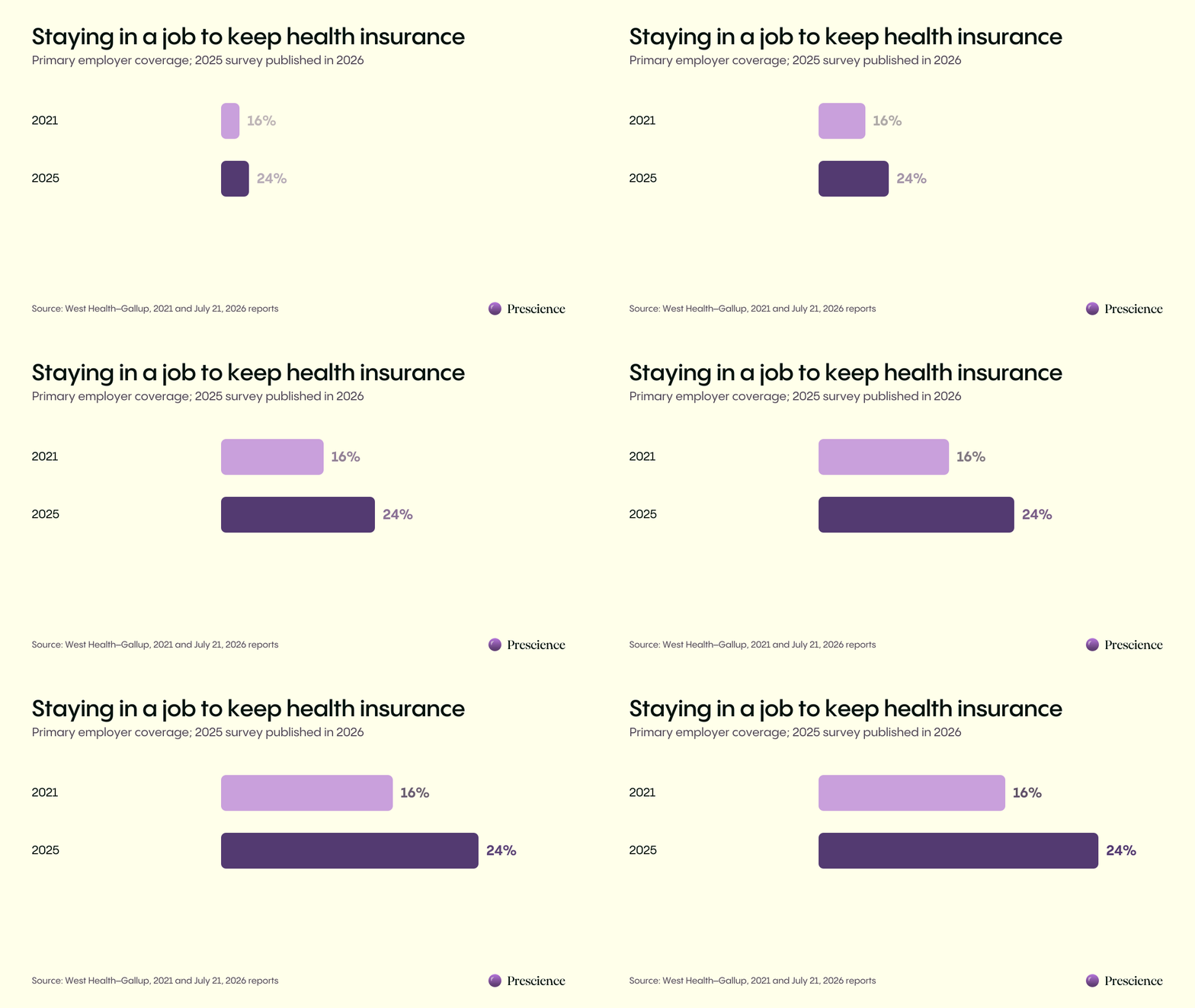
Read the original West Health-Gallup survey for the population and field dates behind the graphic.
Compare the candidate's actual plan documents
There is no single FAANG benefits package. Plan options, contribution policies, employment classes and locations differ. Public recruiting pages often summarize available benefits without establishing the exact eligibility, exclusions or premium for a particular person. I would avoid promising to match an entire company and instead compare the option the candidate actually has with the option your startup will offer.
| Question | Document or check | What to record |
|---|---|---|
| What will leave each paycheck? | Employer contribution and rate sheet | Selected tier, pay frequency and annual employee premium |
| What happens in a high-use year? | SBC and full plan terms | In-network individual and family maximum; exclusions |
| Can I use my clinicians? | Exact network and provider confirmation | Provider location and relevant services |
| Is a medicine covered? | Formulary and pharmacy benefit terms | Drug, dose, tier, authorization and pharmacy |
| Are fertility or other specialized benefits included? | Benefit document and eligibility rules | Coverage limits, exclusions and required providers |
| When does coverage begin? | Eligibility rule and enrollment confirmation | Exact effective date, enrollment deadline and any gap |
The benefits gap in dollars
I would compare annual employee premiums and several care scenarios rather than add two single deductibles and call that a family's likely cost. Family policies can use embedded or aggregate deductibles. A member can also have copays or coinsurance after a deductible. The maximum is a useful covered-care stress test, but it is not an expected annual bill.
Employer health benefits are generally excluded from federal employee income and payroll-tax wages, but tax treatment has exceptions. More-than-2% S corporation shareholders and some dependent coverage need separate review. I would not convert the entire difference into a salary demand using one tax percentage unless every input and tax assumption is stated.
What a seed or Series A startup can realistically match
| Benefit | Realistic at seed or Series A? | Rough cost |
|---|---|---|
| 100% of employee premiums | Yes | About $9,325 per employee per year at the KFF 2025 average |
| 100% of dependent premiums | Yes, for a small team | $17,668 illustrative difference between KFF family and single averages, not an upper limit |
| Low deductible and out-of-pocket maximum | Yes, by choosing the plan | Often higher premiums on a standard carrier plan; compare alternatives |
| 12 or more weeks of paid parental leave | Yes, with a written policy | Model salary continuation and applicable offsets under the written policy |
| IVF and fertility coverage | Ask for a compliant plan option | Check covered services, exclusions and eligibility; do not promise an informal tax-free reimbursement |
| GLP-1s for weight loss | Depends on the plan | Ask each quote whether it's covered and with what rules |
| On-site clinics and large wellness budgets | Depends on business needs | Compare against access improvements employees would actually use |
How I would handle a candidate comparison
Use a blank comparison sheet and let the candidate fill in the current-plan column voluntarily. The startup can complete its own column from approved documents. Mark anything not yet confirmed as pending. If the new policy has a lower premium but a missing provider, do not hide that difference inside an overall savings number.
- Send the exact plan name, SBC and employee contribution schedule. Include family tiers even if the candidate has not said whether they need them.
- Offer a confidential administrator contact for network, medication and transition questions. Managers should not collect diagnosis lists to evaluate a hire.
- Explain how an authorization or deductible credit is confirmed. A broad PPO network does not guarantee that every existing clinician participates.
- Record any enrollment deadline and effective-date assumption in the benefits packet. Ask the candidate to verify the last day of existing coverage.
- If a detail is unresolved, provide an answer from the plan administrator before presenting it as a benefit promise.
This process does not establish that better insurance will close the hire. It gives the candidate a reliable basis for comparing the offer. I would measure whether questions were answered and coverage began as stated, rather than claim a recruiting return from a story about one employee.
Why startups usually lose on benefits
A startup can lose clarity by buying a plan and describing it only as medical, dental and vision. I would focus on the features employees can verify: their contribution, the benefit terms, the network and the support process. Those details are more useful than assumptions about how a large employer runs its plan.
- The plan was picked for price, not for hiring. The first plan is often the cheapest premium a broker or PEO offered, without enough attention to member costs or provider access.
- Dependents are an afterthought. Many small companies pay most of the employee's premium and little of the family's. Families notice first.
- Nobody tells the story. The offer letter says "medical, dental and vision" and nothing else, while the candidate's current plan is spelled out in their benefits portal.
- A waiting period on day one. A 30- or 60-day wait can leave the candidate paying COBRA to cover the gap. The federal waiting-period rule generally limits waiting to 90 calendar days once an employee is otherwise eligible. Confirm the approved eligibility policy and coverage start date; do not assume that the first of the next month eliminates a gap.
How to compete
At Prescience, we design and run your company's health plan, from setup and enrollment to claims, compliance and COBRA. What your team gets:
- An effective $0 deductible, so the plan helps from the first visit.
- Simple copays shown before a visit, capped by a low out-of-pocket maximum.
- A broad national PPO network, plus providers we contract with directly.
- 24/7 physician-led care navigation: a care team that finds the right provider, books appointments and explains costs up front.
What your company gets: one monthly cost set in your quote, usually 10–20% below comparable fully insured coverage and fixed before the plan starts, with no admin fees. You keep your payroll provider, and the plan can start mid-year.
How to build a benefits case into the offer
- Provide the benefits packet early Give the candidate your SBC and contribution schedule. Invite questions about coverage without asking for private medical information. Any current-plan comparison is voluntary.
- Put a number on the difference Use the example above: premium share, deductible and out-of-pocket maximum, for their family size. If your plan wins on some lines, show it.
- Close the gap with the plan before you use salary Compare a contribution change, a different plan and salary using explicit assumptions. A benefits change may affect an entire eligible class, while a raise gives the employee flexible income. Choose based on the company budget and employee priorities.
- Confirm coverage timing Check the old coverage end date, new plan effective date and enrollment deadline. Apply the written eligibility policy consistently. First-of-next-month coverage can leave a gap if the person starts or loses coverage mid-month.
- Write a benefits paragraph into the offer Use the template below and attach your plan's SBC.
- Offer a call with whoever runs the plan Offer a confidential conversation with the benefits administrator to verify providers, prescriptions and transition requirements. Do not promise that a short call will resolve every coverage question.
A benefits blurb for your offer letter
Candidates rarely read plan documents until late in the process. Put the comparison in the offer. Here's a template you can adapt:
Adjust the details to your actual plan documents; they control if anything differs.
See what your team would pay with Prescience
Answer a few questions about your team and get a quote in about 60 seconds, or talk it through with one of our benefits experts.