Estimate COBRA premiums
Employer and employee shares together, for the coverage tier the person keeps.
The full premium is on the employer's rate sheet, or ask HR. Paycheck deductions only show the employee's share, which is why COBRA often costs several times what someone paid while employed.
What COBRA costs at average 2025 premiums
KFF's 2025 Employer Health Benefits Survey puts the average employer plan at $9,325 a year for single coverage and $26,993 for family coverage, about $777 and $2,249 a month. Workers paid $1,440 and $6,850 of that on average. The examples below use those averages; your plan's rates will differ.
How COBRA pricing and timing work
| What happened | Who can elect | Maximum coverage |
|---|---|---|
| Job ended (not for gross misconduct) or hours cut | Employee, spouse and children | 18 months |
| Job loss or reduced hours with a qualifying disability determination and timely notice | Everyone in the family | 29 months |
| Divorce, death, Medicare entitlement or dependent status loss, when it causes qualifying coverage loss | Spouse and children | 36 months |
| Step | Who | Deadline |
|---|---|---|
| General notice of COBRA rights | Plan administrator to new enrollees | Within 90 days after coverage starts |
| Notice of job loss, cut in hours, death or Medicare entitlement | Employer to plan administrator | Within 30 days of the event |
| Notice of divorce or a child losing eligibility | Employee or family member to the plan | At least 60 days allowed (plan sets the deadline) |
| Election notice | Plan administrator to everyone who lost coverage | Generally 14 days after employer notice; if employer is administrator, generally 44 days after the event or applicable later coverage-loss date |
| Electing COBRA | Each qualified beneficiary | At least 60 days from the notice or the loss of coverage, whichever is later |
| First premium | The person electing | At least 45 days after electing |
| Later premiums | The person on COBRA | Grace period of at least 30 days |
| Disability extension | The family to the plan | Follow the plan procedure; generally at least 60 days from the latest applicable determination, event, coverage-loss or notice date, and before the initial 18 months end |
- People have 60 days to elect COBRA after their notice or coverage loss, whichever is later.
- The first payment is due 45 days after electing, and covers back to the day coverage ended, so there's no gap.
- Later payments have a 30-day grace period. A small underpayment (no more than the lesser of $50 or 10% of the premium) counts as full payment unless the plan gives notice and time to pay the difference.
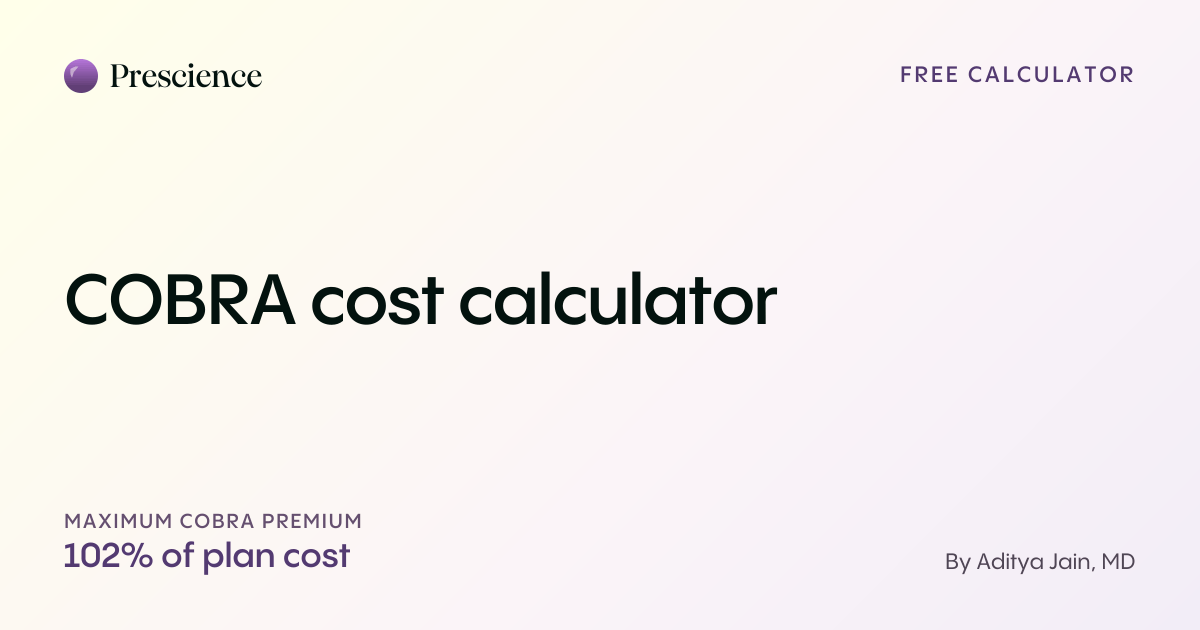
- The usual federal cap is 102% of applicable plan cost. Disability and second-event rules can change the cap, as explained above. An employer may charge less or subsidize coverage.
- Each person in the family can elect separately. A spouse can keep COBRA even if the employee doesn't.
The federal COBRA premium regulation includes the disability and second-event exceptions.
Edge cases employers and employees get wrong
- Counting to 20. An employer is subject to federal COBRA if it had 20 or more employees on more than half of its typical business days in the prior calendar year. Part-time employees count as a fraction based on hours.
- State continuation. State laws can apply to insured plans below the federal threshold and can have different premium limits or extension rules. Verify the employer size, policy type and state regulator's requirements before using the federal calculator for a state continuation estimate.
- A second qualifying event. A spouse or child may extend continuation to 36 months from the original event after a qualifying second event, with timely notice. The second event must satisfy the rule, including that it would cause coverage loss absent the first event.
- Medicare. A person who becomes entitled to Medicare after electing COBRA can lose COBRA. If the employee became entitled to Medicare less than 18 months before leaving, the spouse and children can keep COBRA for up to 36 months from the Medicare date.
- Gross misconduct. Federal COBRA excludes termination for gross misconduct as a qualifying termination event. Do not assume that an ordinary performance dismissal meets that standard. Have the facts reviewed before denying continuation on that basis.
- Early termination. COBRA can end before the maximum if premiums aren't paid on time, the employer stops offering any group health plan, or the person gets other group coverage or Medicare after electing.
- Paying with an HSA. COBRA premiums are a qualified medical expense, so someone with an HSA can pay them tax-free.
- Severance that pays COBRA. Employers can subsidize part or all of the premium for a set number of months. Put the dates and amounts in the separation agreement.
What employers risk by getting COBRA wrong
A missed required COBRA notice can expose the responsible party to tax or ERISA consequences. The section 4980B excise tax is generally $100 per affected person per day, with a $200 family cap for the same failure. Statutory exceptions, correction relief and other caps can apply. Under ERISA, a court may impose up to $110 a day for certain administrator notice failures; that award is discretionary, not an automatic invoice.
Is COBRA worth it?
COBRA continues the employer plan subject to the same changes that affect similarly situated active members. That may preserve current-year deductible progress. A Marketplace plan may cost less after any available credit, but compare real premiums, provider access, medicines and maximum spending. Losing job-based coverage generally opens a Marketplace enrollment window around the loss; verify the effective date before cancelling anything.
- Choose COBRA if someone is pregnant, in active treatment, or has met most of the deductible this year; if your doctors aren't in marketplace networks; or if you expect new job coverage within a few months.
- Compare a Marketplace plan if its actual premium and benefit terms fit your needs. A subsidy depends on household eligibility, not simply being unemployed. Check both premium and covered-care costs instead of assuming COBRA is always more expensive overall.
- Use the election window. You have 60 days to elect, and coverage is retroactive. Some people wait and only elect if they need care, though they then owe every premium back to the start.
- Mind the timing. Voluntarily ending COBRA early generally does not create a Marketplace special enrollment period. Exhausting COBRA or losing an employer contribution may qualify. Open-enrollment dates and effective-date rules depend on the coverage year and Marketplace; check the live enrollment page instead of assuming last year's window still applies.
What an employer does when someone leaves
- Record the qualifying event Note the last day of coverage under your plan. Many plans end coverage on the last day of the month of termination.
- Notify the administrator within 30 days If a carrier or COBRA vendor administers COBRA, tell them about the termination, cut in hours, death or Medicare entitlement.
- Send the election notice Generally within 14 days after the administrator receives employer notice; when the employer is administrator, generally within 44 days after the event or the applicable later loss of coverage. Use the DOL model notice and mail it to the last known address, addressed to the spouse too.
- Set the premium Determine the applicable premium for the 12-month determination period and the amount charged, normally no more than 102%. The rules permit certain mid-period increases, including ending a subsidy or changing coverage tiers. Tell them the amount and due dates.
- Track elections and payments Allow 60 days to elect, 45 days for the first payment and a 30-day grace period after that. Reinstate coverage back to the loss date when they elect.
- End coverage correctly If coverage ends before the maximum period, for example after a missed premium, send a notice explaining why and the date it ended.
COBRA on a Prescience plan
We run COBRA administration for Prescience employers: notices, elections and premium collection, so HR doesn't track deadlines by hand.
At Prescience, we design and run your company's health plan, from setup and enrollment to claims, compliance and COBRA. What your team gets:
- An effective $0 deductible, so the plan helps from the first visit.
- Simple copays shown before a visit, capped by a low out-of-pocket maximum.
- A broad national PPO network, plus providers we contract with directly.
- 24/7 physician-led care navigation: a care team that finds the right provider, books appointments and explains costs up front.
What your company gets: one monthly cost set in your quote, usually 10–20% below comparable fully insured coverage and fixed before the plan starts, with no admin fees. You keep your payroll provider, and the plan can start mid-year.
See what your team would pay with Prescience
Answer a few questions about your team and get a quote in about 60 seconds, or talk it through with one of our benefits experts.